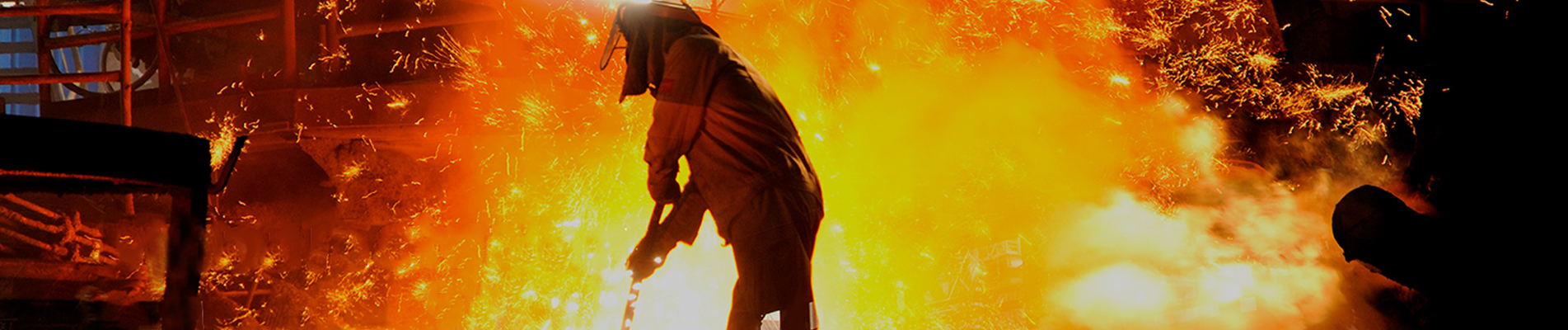
Vermiculite coated fiberglass fabric is widely used to manufacture welding blankets, curtains and hot-work barriers because the mineral-treated surface improves the thermal and abrasion performance of woven fiberglass. However, a fabric described as suitable for welding protection is not automatically suitable for every welding, cutting or molten-metal exposure.
The correct material depends on what will strike the blanket, how long the hot material remains in contact with it, whether the blanket is vertical or horizontal, and what must be protected on the opposite side.
BSTFLEX supplies Vermiculite Coated Fiberglass Fabric in multiple thicknesses for welding protection, industrial heat shielding and fabricated thermal barriers. Finished welding protection products can also be selected through the Welding & Soldering Area Protection range.
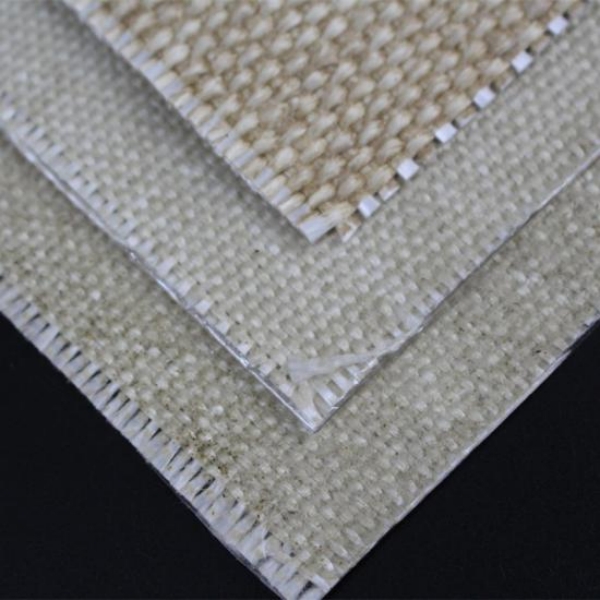
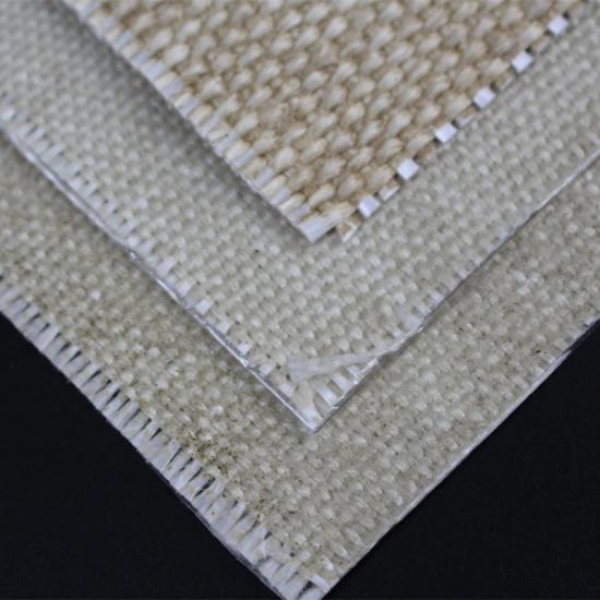
The base fiberglass fabric provides a flexible, non-combustible textile reinforcement. A vermiculite treatment adds a dry mineral surface that helps protect the glass yarn against direct thermal exposure and abrasion.
Compared with untreated fiberglass cloth, a suitable vermiculite-treated construction can offer advantages where the blanket must deal with repeated sparks, welding spatter and hot particles.
Typical reasons for selecting it include:
The coating should not be treated as a guarantee against unlimited molten-metal exposure. The blanket must still be selected for the actual hot-work process.
Purchasing specifications often use the general phrase "welding sparks," but different hot particles place very different loads on a protective fabric.
| Exposure | Typical behavior | Selection concern |
|---|---|---|
| Sparks | Small hot particles with relatively low individual mass | Coverage, fabric integrity and resistance to repeated exposure |
| Welding spatter | Molten or semi-molten droplets generated near the weld | Droplet size, temperature, frequency and contact time |
| Hot slag | Larger and heavier hot material that may retain heat longer | Whether material falls away or remains on the blanket |
| Molten-metal splash | Potentially more severe liquid-metal exposure | Metal type, temperature, quantity, impact and tested protection level |
| Radiant heat | Heat transferred without direct particle contact | Exposure intensity, duration and heat transfer through the barrier |
This is why selecting a welding blanket only by its maximum temperature rating is not sufficient.
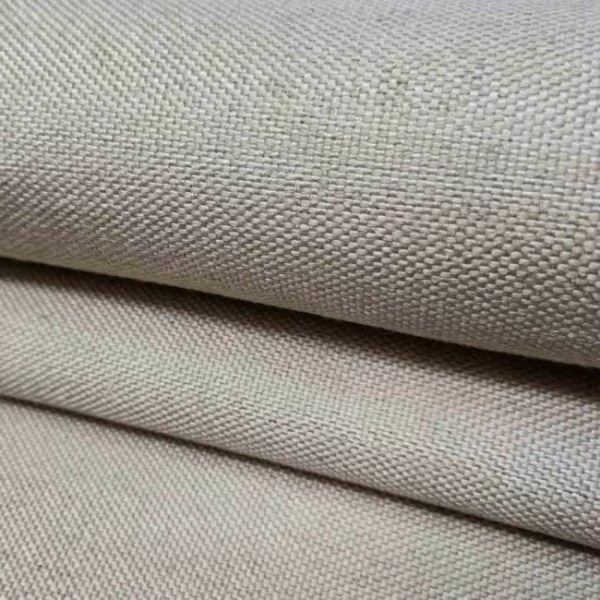
Orientation has a major effect on welding blanket performance.
A vertically installed curtain allows many sparks and droplets to strike the surface and fall away. Contact time may therefore be relatively short.
The fabric still needs enough coverage and durability for the expected hot-work process, but the thermal load can differ significantly from a horizontal blanket placed underneath cutting or welding operations.
A horizontal blanket can collect sparks, spatter and slag. Hot material may remain in one location rather than immediately falling away.
This increases local heat exposure and may require:
Do not assume that a fabric suitable as a vertical curtain will provide the same protection when used flat underneath heavy welding or cutting work.
Vermiculite coated fiberglass fabric is available in different base cloth constructions, finished weights and thicknesses. Heavier fabric can provide more material between the heat source and the protected surface, but greater weight does not create a simple linear increase in temperature rating.
BSTFLEX supplies vermiculite coated fiberglass fabric in thicknesses from approximately 0.8 mm to 3.0 mm, depending on the required construction.
When comparing two grades, request:
A 2.0 mm fabric and a 0.8 mm fabric should not be treated as interchangeable merely because both use vermiculite-treated fiberglass.
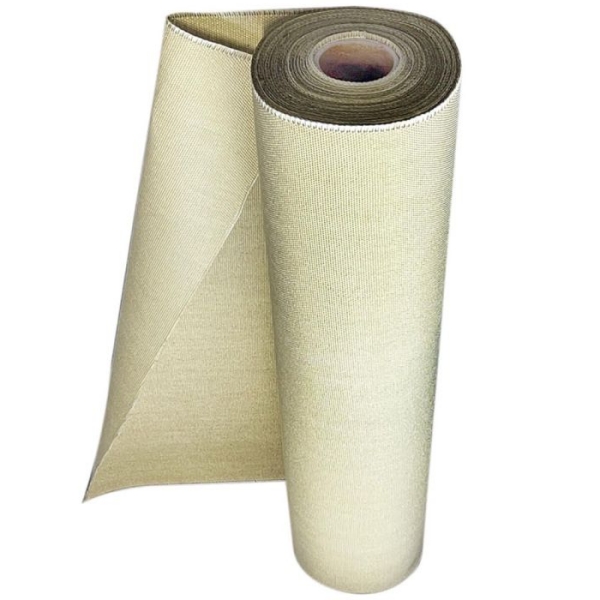
BSTFLEX vermiculite coated fiberglass fabric is published for high-temperature applications up to approximately 815°C / 1500°F depending on application conditions.
This number describes the material's thermal capability under appropriate service conditions. It does not mean the blanket can continuously collect molten material at 815°C without damage.
A welding spark may be hotter than the published continuous-service temperature while contacting the fabric only briefly. Conversely, a lower-temperature heavy slag particle that remains in one position for an extended period may impose a severe local thermal load.
For a detailed explanation of these distinctions, see the BSTFLEX guide to Vermiculite Coated Fiberglass Fabric Temperature Rating: 750°C, 815°C and Peak Exposure Explained.
A fabric may resist ignition or remain intact during a flame test without being qualified for prolonged molten-metal exposure.
These properties answer different questions:
| Property | What it evaluates |
|---|---|
| Flame resistance | Behavior under a specified flame test |
| Continuous temperature rating | Long-term thermal service conditions |
| Welding spatter resistance | Response to hot droplets generated during welding |
| Molten-metal resistance | Protection against a defined liquid-metal exposure |
| Radiant heat resistance | Heat transfer caused by thermal radiation |
| Burn-through resistance | Whether the barrier prevents penetration under a defined exposure |
If a plant, insurer or hot-work procedure requires a specific welding blanket test or certification, state that requirement in the RFQ. A general material description should not be used as a substitute for the required qualification.
For routine welding where the main concern is dispersed sparks and moderate spatter, a suitable vermiculite coated fiberglass blanket can provide a practical flexible barrier.
Fabric weight and installation should still be selected according to the intensity of the process and the vulnerability of surrounding equipment.
Stick welding can create more significant spatter and slag. Consider both particle quantity and whether the blanket will be installed vertically or horizontally.
A heavier vermiculite fiberglass construction may be appropriate for more demanding duty, but the specific exposure should determine the final grade.
Grinding often creates a broad stream of sparks that can travel considerable distances. Coverage area can be just as important as fabric thickness.
The blanket or curtain should extend beyond the immediate work zone so sparks cannot bypass the barrier through gaps.
Cutting operations can produce larger quantities of hot slag and molten material than routine welding.
When material falls onto a horizontal blanket and remains there, a standard welding curtain specification may not be adequate. Higher-temperature silica fabrics or other specially qualified constructions should be evaluated where the exposure exceeds the selected vermiculite fiberglass grade.
High silica fabric should be evaluated when the application involves temperatures or molten-material exposure beyond the practical range of the selected fiberglass construction.
BSTFLEX 96% High Temperature Silica Fabric is designed for substantially higher-temperature applications than conventional fiberglass.
This does not mean silica should automatically replace vermiculite fiberglass for every welding blanket. Silica fabric may have different cost, weight, flexibility and fabrication characteristics.
The correct comparison is:
What protection does this particular welding process require?
not:
Which material has the highest catalogue temperature?
Brown, tan, grey, black and other colors are commonly associated with different high-temperature fabric treatments, but color is not a technical specification.
Two brown vermiculite fabrics can have different:
For repeat orders, identify the approved product by material code, technical specification and reference sample rather than by color alone.
A welding blanket should be inspected as part of the site's hot-work procedure.
Look for:
A blanket can retain its overall shape while losing flexibility or strength in a locally overheated area.
Do not continue using damaged fabric solely because no complete hole is visible. Follow the site's inspection and replacement criteria for protective welding equipment.
Roll fabric is only one component of a finished welding blanket.
The fabricated product may also require:
The sewing thread, seams and attachment hardware must be appropriate for their own exposure. A high-temperature fabric does not automatically make every component of the finished blanket suitable for the same conditions.
BSTFLEX can supply custom welding protection products in different dimensions and constructions. See the Welding & Soldering Area Protection category for finished blanket options.
| RFQ item | Information to provide |
|---|---|
| Hot-work process | MIG, TIG, stick welding, grinding, cutting or other process |
| Exposure | Sparks, welding spatter, slag, radiant heat or molten-metal splash |
| Orientation | Vertical curtain, inclined barrier or horizontal blanket |
| Temperature | Continuous heat exposure and any short-duration peaks |
| Fabric requirement | Required thickness, weight or existing material specification |
| Blanket size | Length, width and required coverage area |
| Attachment | Grommets, eyelets, hooks, straps or other installation requirements |
| Quantity | Prototype, maintenance quantity or production demand |
| Qualification | Required test method, certification or customer specification |
For OEM or repeat purchasing, drawings and existing samples are especially useful. If a previous blanket failed, include photographs and describe where the damage occurred.
Yes. It is widely used for welding blankets and curtains because the treated fiberglass construction provides high-temperature capability, abrasion resistance and protection against sparks and welding spatter. The required grade still depends on the severity and orientation of the exposure.
No. It is a material service-temperature reference for specified constructions. Welding spatter is a short-duration contact hazard and must be evaluated separately according to droplet size, quantity, contact time and blanket orientation.
No. Greater thickness may improve durability or thermal mass, but it does not automatically provide a higher material temperature rating. Flexibility, weight, installation and the actual hazard must also be considered.
It can be used in suitable applications, but horizontal installation is generally more demanding because hot particles may remain on the fabric. Heavy slag or molten-metal exposure may require a heavier or higher-temperature construction and application-specific qualification.
Yes. Vertical curtains are a common application. Confirm the required fabric weight, dimensions, attachment system and protection level for the welding process involved.
The distinction is largely related to installation and exposure. A curtain is normally suspended vertically to contain sparks and spatter, while a blanket may cover equipment or be placed around or beneath the work area. Horizontal blankets can experience longer contact with hot particles.
For roll material, send BSTFLEX your required thickness, width, quantity and hot-work application for selection from the Vermiculite Coated Fiberglass Fabric range.
For finished welding blankets or curtains, provide the dimensions, installation orientation, expected sparks, spatter or slag exposure, and required attachment details. Custom sizes can be produced according to project requirements.
See the BSTFLEX Welding & Soldering Area Protection range or contact BSTFLEX for material selection, samples and quotation support.

 English
 français
 Deutsch
 русский
 italiano
 español
 português
 العربية
 日本語
日本語 한국의
한국의 Türkçe
 Polski
 Tiếng Việt
 slovenský
 Indonesia