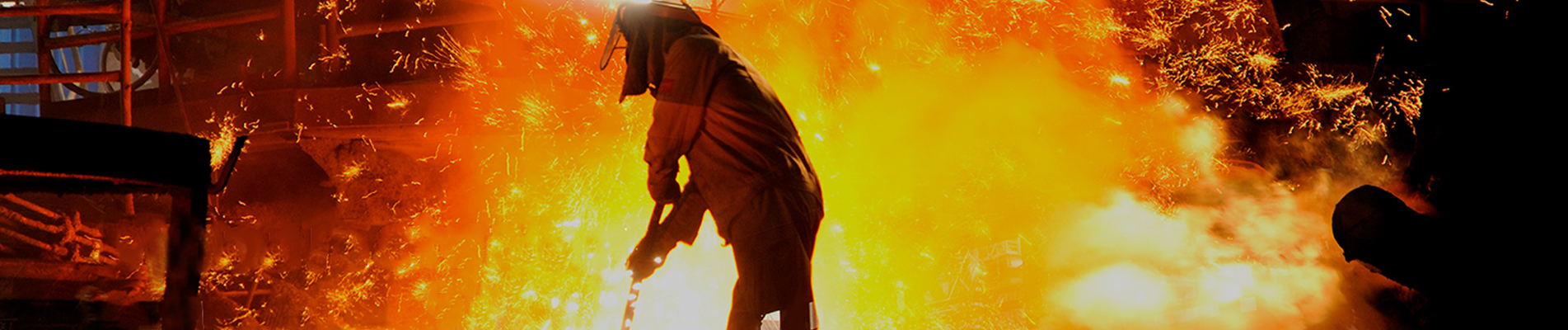
Een lasdeken voor hoge temperaturen mag niet worden geselecteerd op basis van een enkelvoudig maximumtemperatuurgetal.
Twee dekens kunnen beide worden omschreven als geschikt voor gebruik bij hoge temperaturen, terwijl ze zich heel anders gedragen onder lasspatten, gesmolten spatten, stralingswarmte of langdurig contact met een heet onderdeel. De basisvezel, coating, stofgewicht, dikte, oriëntatie van de deken en de duur van de blootstelling beïnvloeden allemaal de werkelijke prestaties.
Voor industriële inkopers is de nuttigere vraag niet simpelweg: "Welke temperatuur kan deze lasdeken weerstaan?" Het is:
Welke temperatuurclassificatie is van toepassing op deze volledige dekenconstructie onder mijn werkelijke bedrijfsomstandigheden?
BSTFLEX produceert industriële lasdekens en lasbranddekens met behulp van glasvezel, silica, met siliconen gecoate stoffen, gealuminiseerde stoffen en koolstofvilt voor verschillende las-, snij-, slijp- en heetwerkzaamheden.
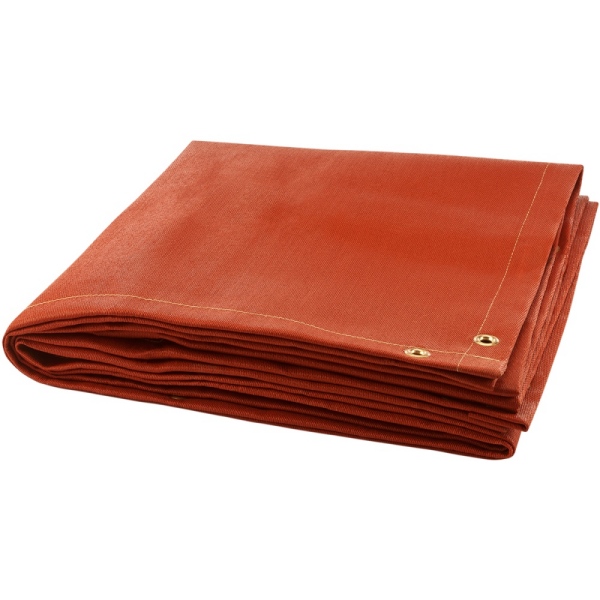
Temperatuurspecificaties voor lasdekens kunnen verschillende omstandigheden beschrijven. Deze waarden mogen niet als uitwisselbaar worden beschouwd.
Continue werktemperatuur verwijst naar het temperatuurbereik waarin een materiaal bedoeld is om gedurende een langere periode onder gespecificeerde omstandigheden te werken.
Dit is meestal het meest nuttige uitgangspunt wanneer een deken gedurende lange tijd in de buurt van een warmtebron blijft.
Kortstondige temperatuur verwijst naar tijdelijke blootstelling aan een hogere temperatuur gedurende een beperkte periode.
Lasspatten en kortstondig contact met hete deeltjes kunnen korte, gelokaliseerde thermische pieken creëren die heel anders zijn dan continue blootstelling aan hitte.
Een smeltpunt van een vezel mag niet worden geïnterpreteerd als de normale werktemperatuur van een afgewerkte lasdeken.
Een materiaal kan aan sterkte verliezen, coatings kunnen degraderen en oppervlakteafwerkingen kunnen verslechteren lang voordat de basisvezel zijn smeltpunt bereikt.
Voor inkoop- en technische beslissingen is de gespecificeerde bedrijfstemperatuur van de afgewerkte deken relevanter dan het theoretische smeltpunt van de vezel.
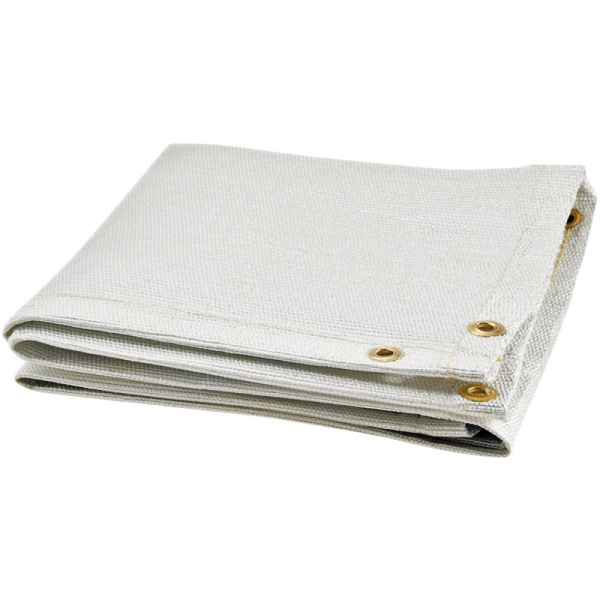
Beschouw twee toepassingen die beide een warmtebron van bijna 800°C inhouden.
In de eerste toepassing hangt een deken verticaal op enkele meters van de werkzaamheden en ontvangt deze af en toe vonken.
In de tweede toepassing ligt de deken horizontaal onder een snijproces en blijft hete slak op het oppervlak liggen.
De piektemperatuur lijkt misschien vergelijkbaar, maar de thermische belasting op de deken is totaal anders.
Belangrijke variabelen zijn onder meer:
Dit is de reden waarom een betrouwbare specificatie voor een lasdeken de bedrijfsomstandigheden moet beschrijven in plaats van alleen te vertrouwen op het hoogste temperatuurgetal dat in een catalogus wordt getoond.
Verschillende materialen voor lasdekens nemen verschillende posities in binnen een thermisch beschermingssysteem.
| Materiaaltype | Typische reden voor selectie | Belangrijke temperatuuroverweging |
|---|---|---|
| Glasvezel | Algemeen laswerk, vonken en routinematig heet werk | Geschikt voor veel toepassingen met een gemiddelde temperatuur, maar constructie en coating beïnvloeden het bruikbare bereik |
| Hoge silica | Zwaar laswerk, snijden en hogere thermische blootstelling | Geselecteerd waar een grotere thermische stabiliteit dan standaard glasvezel vereist is |
| Met siliconen gecoat glasvezel | Herhaaldelijke hantering, slijtage en werkplaatsgebruik | Het siliconenoppervlak kan een lagere gebruikslimiet hebben dan het glasvezelsubstraat |
| Met siliconen gecoat silica | Basistextiel voor hogere temperaturen gecombineerd met een duurzame coating | Evalueer zowel de limieten van het silicasubstraat als de siliconencoating |
| Gealuminiseerd glasvezel | Bescherming tegen stralingswarmte | Reflecterende prestaties zijn vaak belangrijker dan simpelweg de hoogste contacttemperatuur selecteren |
| Koolstofvilt | Thermische isolatie en bescherming rond onregelmatige vormen | Prestaties hangen sterk af van atmosfeer, dikte en blootstellingsmethode |
Glasvezel wordt veel gebruikt voor algemene lasbescherming omdat het een praktische balans biedt tussen hittebestendigheid, flexibiliteit en kosten.
Het wordt gewoonlijk geselecteerd voor:
Niet alle glasvezel lasdekens hebben echter dezelfde werktemperatuur.
Stofgewicht, garenconstructie, oppervlaktebehandeling en coating beïnvloeden allemaal de prestaties.
Wanneer een glasvezeldeken dicht bij zwaar snijwerk, ernstige gesmolten slakken of langdurige hoge hitte wordt gebruikt, moet de koper evalueren of een constructie met hoge silica een geschiktere thermische marge zou bieden.
Stof met een hoog silicagehalte wordt gewoonlijk geselecteerd wanneer de toepassing het praktische bereik van standaard glasvezel overschrijdt of wanneer een grotere marge tegen ernstige thermische blootstelling vereist is.
BSTFLEX Silica textiel lasdekens zijn vervaardigd van silicatextiel en zijn verkrijgbaar in verschillende stofgewichten en afgewerkte constructies.
Typische toepassingen zijn onder meer:
Voor deze toepassingen wordt vaak silica gekozen omdat het weefsel nuttige textieleigenschappen kan behouden bij temperaturen waarbij conventioneel glasvezel minder geschikt wordt.
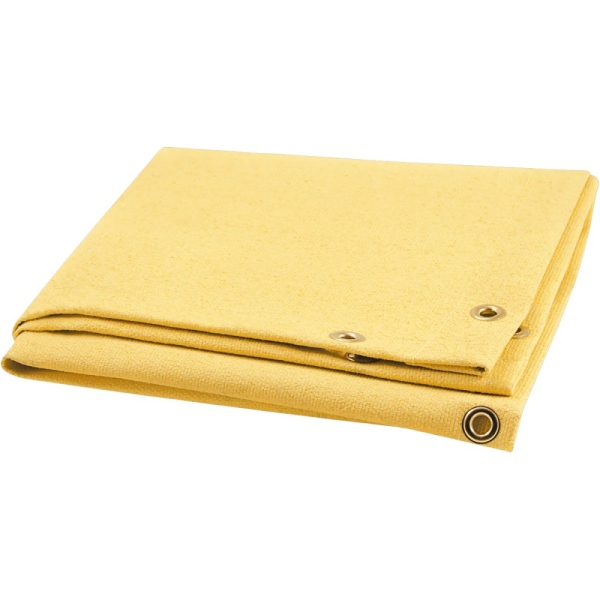
Een van de belangrijkste specificatiefouten is het gebruik van een kortstondige temperatuurwaarde alsof het een continue werktemperatuur betreft.
Een lasdeken kan een korte blootstelling aan een vonk of deeltje met een hoge temperatuur overleven zonder geschikt te zijn voor continu direct contact bij diezelfde temperatuur.
Bijvoorbeeld, een paar seconden gelokaliseerde blootstelling tijdens het snijden is anders dan het direct omwikkelen van een component met een deken die enkele uren heet blijft.
Bij het aanvragen van een offerte moeten kopers onderscheid maken tussen:
Dit probleem is vooral belangrijk bij gecoate lasdekens.
Een met siliconen gecoate glasvezeldeken bevat twee verschillende materiaalsystemen:
Het glasvezelsubstraat kan thermische stabiliteit behouden bij temperaturen boven het normale bedrijfsbereik van de siliconencoating.
BSTFLEX's Met siliconen gecoate glasvezellasdeken, gebruikt bijvoorbeeld een glasvezelbasis met een siliconenoppervlak. De coating is bedoeld om de flexibiliteit, slijtvastheid, lekbestendigheid en duurzaamheid bij hantering te verbeteren.
Dit betekent dat de koper er nooit vanuit mag gaan dat de temperatuurbestendigheid van de glasvezelbasis automatisch geldt voor het gecoate oppervlak.
Voor toepassingen met hogere temperaturen waarvoor een gecoat weefsel vereist is, kunnen Met siliconen gecoate silicalasdekens ook worden overwogen, maar de beperking van de coating moet nog steeds onafhankelijk van het silicasubstraat worden geëvalueerd.
Twee lasdekens gemaakt van dezelfde vezel kunnen verschillend presteren omdat hun massa en constructie verschillend zijn.
Een zwaarder weefsel biedt over het algemeen meer materiaal tussen de warmtebron en het beschermde oppervlak. Een dikkere structuur kan ook de warmteoverdracht vertragen.
Echter, zwaarder is niet automatisch beter.
Het verhogen van het weefselgewicht kan ook het volgende verhogen:
Daarom moet het gewicht van de stof worden gekozen in combinatie met de temperatuur, de blootstellingsduur en de installatievereisten.
De oriëntatie van de deken kan de bedrijfsomstandigheden drastisch veranderen.
Een verticaal opgehangen lasdeken vangt meestal vonken en spatten op die de stof kortstondig raken voordat ze wegvallen.
Dit kan de duur van de geconcentreerde hitteblootstelling verminderen.
Een deken die onder las- of snijwerkzaamheden is geplaatst, kan te maken krijgen met zwaardere omstandigheden omdat hete deeltjes, slakken of gesmolten metaal op het oppervlak kunnen landen en daar blijven liggen.
De hitte wordt gedurende een langere periode op één plek geconcentreerd.
Om deze reden mag niet automatisch worden aangenomen dat een materiaal dat naar tevredenheid presteert als verticaal lasgordijn, ook geschikt is voor horizontaal gebruik bij zware spatten.
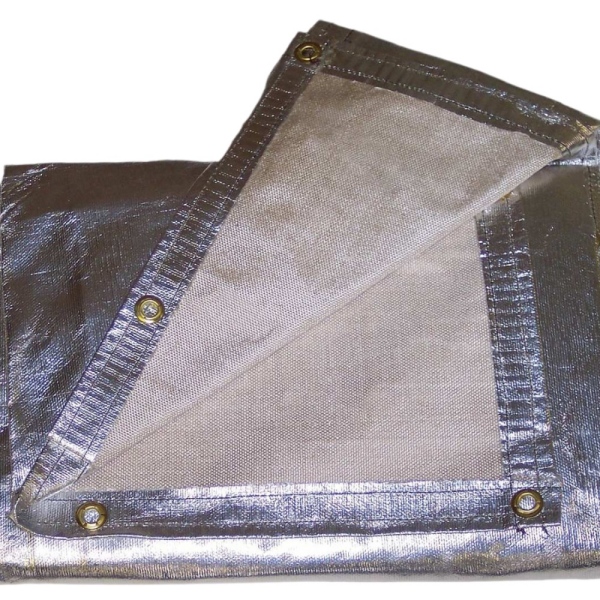
Niet elke toepassing bij lassen op hoge temperatuur omvat direct contact.
In gieterijen, ovenruimtes en metaalverwerkende fabrieken kan stralingswarmte het dominante thermische gevaar zijn.
In deze situatie kan een gealuminiseerd oppervlak nuttig zijn omdat het een deel van de inkomende stralingsenergie reflecteert in plaats van alleen te vertrouwen op de massa van de stof om hitte te absorberen.
BSTFLEX Lasdeken van glasvezel met aluminiumfoliecoating is ontworpen voor toepassingen waarbij reflectie van stralingswarmte belangrijk is.
De reflecterende kant moet normaal gesproken naar de stralingswarmtebron gericht zijn.
Een gealuminiseerd oppervlak moet echter niet automatisch worden gekozen voor zware directe blootstelling aan gesmolten spatten. Bescherming tegen stralingswarmte en bescherming tegen direct contact zijn verschillende technische vereisten.
Koolstofvilt neemt een andere positie in dan geweven glasvezel of silicastof.
De zachte, poreuze structuur kan effectieve thermische isolatie bieden terwijl het zich vormt rond machines, leidingen en onregelmatige onderdelen.
De lasdeken van koolstofvilt van BSTFLEX is gespecificeerd voor temperaturen tot 1800°F (980°C), maar dat getal moet nog steeds worden geïnterpreteerd op basis van de afgewerkte constructie van de deken en de werkelijke werkomgeving.
Koolstofmaterialen gedragen zich anders in de lucht dan in een vacuüm of in inerte ovenomstandigheden. Daarom moeten temperatuurcijfers voor koolstofvilt van ovenkwaliteit niet automatisch worden overgedragen op lasdekens die in de open lucht worden gebruikt.
Voor een gedetailleerde uitleg, zie Tegen welke temperatuur is koolstofvezelvilt bestand?
“Hoge temperatuur” en “zwaar laswerk” zijn gerelateerde, maar niet identieke termen.
Een deken kan worden blootgesteld aan sterke stralingswarmte zonder dat er gesmolten metaal op terechtkomt. Een andere deken kan werken bij een lagere gemiddelde temperatuur terwijl deze herhaaldelijk wordt blootgesteld aan zware slakken en scherp slijpafval.
Een volledige selectie moet daarom zowel thermische als mechanische gevaren evalueren.
| Gevaar | Selectieoverweging |
|---|---|
| Continue hitte | Gebruik de gespecificeerde continue bedrijfstemperatuur |
| Korte temperatuurpieken | Evalueer het vermogen voor kortstondige blootstelling |
| Zware lasspatten | Houd rekening met de massa van de stof, het gedrag van het oppervlak en de oriëntatie van de deken |
| Gesmolten slakken | Evalueer de verblijftijd en het risico op horizontale blootstelling |
| Stralingswarmte | Overweeg reflecterende gealuminiseerde constructies |
| Slijtage | Overweeg gecoate stoffen en zwaardere constructies |
| Onregelmatige onderdelen | Overweeg flexibel silica of vormbaar koolstofvilt |
Voor routinematig lassen, fabricage en vonkbescherming zijn glasvezelconstructies vaak het eerste materiaal dat wordt geëvalueerd, omdat ze economische bescherming en eenvoudige hantering bieden.
Stof met een hoog silicagehalte kan geschikter zijn wanneer sterkere thermische belastingen, zwaar snijwerk en herhaalde blootstelling worden verwacht.
Met siliconen gecoat glasvezel kan nuttig zijn wanneer de deken herhaaldelijk wordt geïnstalleerd, verwijderd, versleept of gevouwen en oppervlaktebestendigheid belangrijk is.
Gealuminiseerd glasvezel moet worden overwogen wanneer reflectie van stralingsenergie een primaire vereiste is.
Koolstofvilt kan worden overwogen wanneer een lichtgewicht, vormbare isolatielaag rond onregelmatige onderdelen vereist is.
Termen zoals MIG, TIG, booglassen en plasmasnijden helpen bij het beschrijven van een toepassing, maar ze bieden niet genoeg informatie om een deken te selecteren.
Twee MIG-lasstations kunnen zeer verschillende thermische omgevingen creëren, afhankelijk van:
Het thermische gevaar moet daarom onafhankelijk van de procesnaam worden geëvalueerd.
Om de juiste constructie te selecteren, verstrekt u zoveel mogelijk van de volgende informatie:
Deze informatie stelt de leverancier in staat om de volledige thermische conditie te evalueren in plaats van alleen een materiaal op basis van temperatuur te selecteren.
Als de belangrijkste vraag is welke vezelconstructie u moet kiezen, bekijk dan onze gedetailleerde gids:
Materialen voor lasdekens: glasvezel, silica, siliconen, gealuminiseerd en koolstofvilt.
Dat artikel vergelijkt de materiaalfamilies, terwijl deze gids zich specifiek richt op hoe temperatuurclassificaties en bedrijfsomstandigheden moeten worden geïnterpreteerd.
Er is geen enkele temperatuurclassificatie voor alle lasdekens. De bruikbare temperatuur hangt af van de basisvezel, coating, dikte, constructie, blootstellingsduur en werkomgeving. Productspecifieke continue en kortstondige classificaties moeten worden gebruikt in plaats van een algemene temperatuur voor lasdekens.
Het juiste materiaal hangt af van hoe de hitte de deken bereikt. Hoogwaardig silica-weefsel wordt vaak overwogen voor zware thermische blootstelling, gealuminiseerde weefsels voor stralingswarmte en koolstofvilt voor vormbare thermische isolatie. Mechanische blootstelling en de positie van de deken moeten ook in overweging worden genomen.
Textiel met een hoog silica-gehalte wordt over het algemeen geselecteerd voor gebruik bij hogere temperaturen dan conventioneel glasvezel. De uiteindelijke bruikbare temperatuur hangt echter af van de werkelijke weefselkwaliteit, het gewicht, de coating en de constructie van de afgewerkte deken.
Niet noodzakelijkerwijs. De siliconencoating kan een lagere werktemperatuur hebben dan het glasvezelsubstraat. De coating en het basisweefsel moeten daarom afzonderlijk worden geëvalueerd bij het specificeren van een met siliconen gecoate lasdeken.
Niet automatisch. Extra dikte kan de thermische scheiding en weerstand tegen warmteoverdracht verbeteren, maar de vezelchemie en coating bepalen nog steeds de fundamentele thermische limieten van het materiaal.
Dat kan. Hete deeltjes en gesmolten spatten kunnen op een horizontaal oppervlak blijven liggen in plaats van eraf te vallen, waardoor een langere lokale blootstelling ontstaat. Daarom moet de oriëntatie van de deken worden meegenomen in het materiaalselectieproces.
Een continue classificatie verwijst naar langdurig gebruik binnen een gespecificeerd temperatuurbereik. Een intermitterende of kortstondige classificatie is van toepassing op tijdelijke blootstelling aan hogere temperaturen. Een kortstondige waarde mag niet worden behandeld als een classificatie voor continu gebruik.
BSTFLEX produceert lasdekens voor hoge temperaturen voor industrieel lassen, snijden, slijpen, onderhoud en bescherming bij heet werk.
Beschikbare constructies zijn onder meer glasvezel, silica, met siliconen gecoat glasvezel, met siliconen gecoat silica, gealuminiseerd glasvezel en koolstofvilt, met aangepaste maten, stofgewichten, versterkte randen, stiksels voor hoge temperaturen en configuraties met zeilringen beschikbaar voor OEM- en industriële projecten.
Stuur ons uw bedrijfstemperatuur, maximale temperatuur, type hitteblootstelling, positie van de deken, vereiste afmetingen en hoeveelheid. BSTFLEX kan de toepassing evalueren en een geschikte constructie voor de lasdeken aanbevelen.
Bekijk het volledige assortiment BSTFLEX lasdekens en brandwerende lasdekens of neem contact met ons op voor een offerte op maat.

 English
 français
 Deutsch
 русский
 italiano
 español
 português
 العربية
 日本語
日本語 한국의
한국의 Türkçe
 Polski
 Tiếng Việt
 slovenský
 Indonesia