English
 français
 Deutsch
 русский
 italiano
 español
 português
 العربية
 日本語
 한국의
 Türkçe
 Polski
 Tiếng Việt
 slovenský
 Indonesia




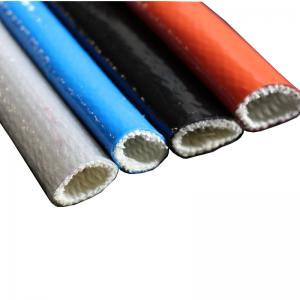
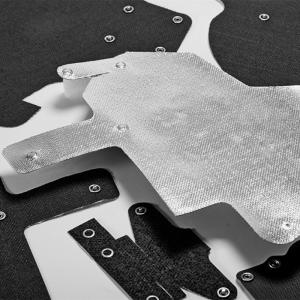
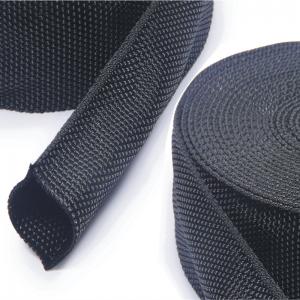
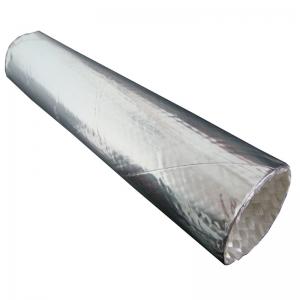
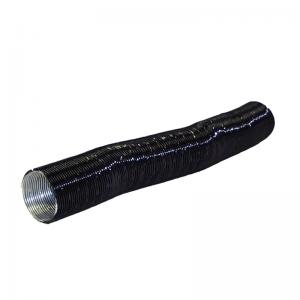
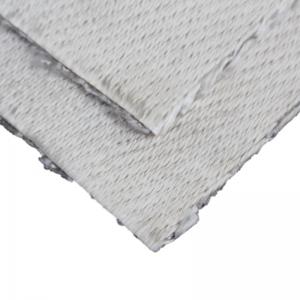
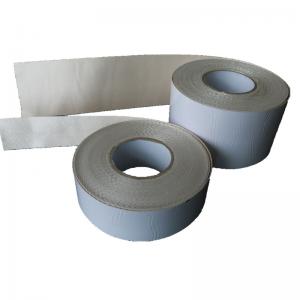
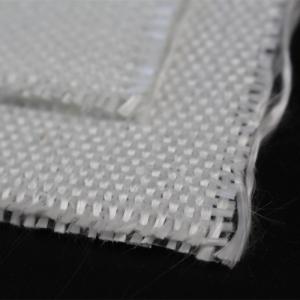
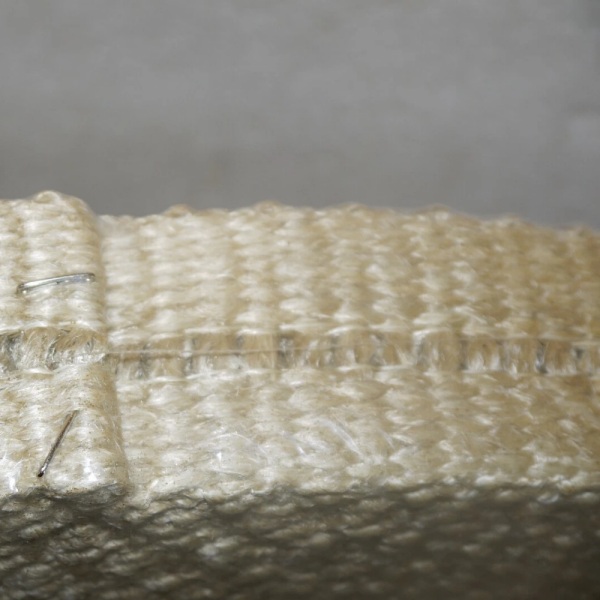
Vermiculite coated fiberglass drop-warp tape combines a coated fiberglass textile with a central fixing zone formed by omitting selected lengthwise yarns. This construction can accommodate bolts or studs in an industrial thermal joint, but it does not define a universal hole pitch, sealing load or temperature rating.
BSTFLEX Vermiculite Coated Fiberglass Drop Warp Tape is intended for industrial insulation and bolted thermal-seal details. This guide explains how to specify the center opening, fastener layout, coating, installed contact and temperature conditions before ordering.
What Makes Drop-Warp Tape Different?
In a woven tape, warp yarns run along the length and weft yarns cross the width. In a drop-warp construction, selected warp yarns are omitted from a central zone, creating an open or reduced-yarn section between woven side bands.
The center zone can provide space for bolts, studs or other approved retainers. It is not necessarily a row of factory-punched circular holes; crosswise yarns may remain across the opening. Check the actual construction and a physical sample before assuming a fastener can pass through at every point.
Separate Center-Opening Width from Bolt Pitch
- Center-opening width: transverse width of the drop-warp zone.
- Bolt pitch: center-to-center distance between fasteners along the equipment.
- Side-band width: woven material remaining on each side of the center zone.
- Overall tape width: total width of the finished tape.
A tape can have a suitable center opening but still be unsuitable if the bolt row is offset, the side bands do not land on the seating surfaces, or the overall width exceeds the available space. Do not infer standard bolt pitch from the product name. The equipment drawing must define fastener positions, end offsets and clearances.
What to Measure Before Selecting the Tape
| Dimension or condition | What to record |
|---|---|
| Overall tape width | Required coverage and available seating width. |
| Center opening | Width of the drop-warp zone and its position relative to the tape edges. |
| Fastener diameter | Actual bolt or stud diameter, including sleeves or shoulders. |
| Bolt layout | Center-to-center pitch, end offsets, number of fasteners and non-uniform spacing. |
| Side-band contact | Width of the surfaces that woven bands must contact. |
| Installed thickness | Required closed-joint gap or compressed thickness and measurement condition. |
| Joint geometry | Straight lengths, corners, bends, transitions and restricted areas. |
Use the approved equipment drawing wherever possible. A worn strip may have changed through compression, thermal damage, fraying or permanent deformation, so it may not represent the original design dimensions.
Why the Side Bands Matter
The drop-warp center accommodates the fixing arrangement; it does not replace the contact area required by the joint. The side bands must sit on the intended seating surfaces without folding, bunching or being pulled away by the fasteners.
A larger center opening is not automatically better because it can reduce the woven material available beside the fixing zone. Do not cut into the side bands to make a misaligned bolt fit unless the design has been reviewed and the modified construction approved.
What Does the Vermiculite Coating Contribute?
The base material is fiberglass textile. A vermiculite coating changes the exposed surface and can improve the tape's response to heat and surface wear compared with an untreated construction. The actual benefit depends on coating formulation, coverage, textile and exposure conditions.
The coating does not turn the tape into silica or ceramic fiber, and it does not automatically qualify the finished strip for every direct-flame, molten-metal, chemical or continuous-temperature duty. Identify the coating's purpose and request product-specific evidence for the required conditions.
Specify Continuous Temperature and Peak Exposure Separately
Continuous service temperature, intermittent peak temperature and direct-flame exposure are different conditions. A short-duration exposure value should not be used as the normal operating limit for a tape that remains under compression or must flex during service.
The current p203 product page advertises a value up to 1000°C but does not clearly define whether it means continuous service, peak exposure, a fiber limit or a test result. Confirm the rating for the exact finished construction before putting a numeric temperature into an equipment specification.
For technical review, provide normal temperature at the tape location, maximum short-duration temperature, peak duration and frequency, direct-flame exposure if any, required condition after cooling, and whether the joint opens and closes repeatedly.
Installed Thickness and Compression Need Their Own Specification
Nominal tape thickness is measured on the supplied textile under a defined condition. Installed thickness is the dimension after the retainer and joint surfaces apply their load. Record whether the drawing controls the closed gap, compressed thickness or a specified load.
There is no universal compression percentage or bolt torque established by the term “vermiculite drop-warp tape.” Do not tighten hardware beyond the approved design limit to compensate for a poor fit.
Plan Corners, Ends and Joints Before Cutting
Trial the most complex part of the route before cutting production length. Show start and finish points, center-opening orientation, fastener row, corner details, joint locations, permitted overlap and areas that must remain clear for inspection or movement.
Do not add an overlap or extra layer merely to cover a gap if the added build-up prevents the cover from closing. Where the joint requires a defined leakage performance, use the equipment's qualified seal design and test criteria.
Mechanical Retention Is Not the Same as Pressure Sealing
Bolts can retain the tape, but the presence of bolts does not make the textile a pressure-rated gasket. A woven strip may have paths through the weave, center zone or cut edges. Coating does not automatically make those paths gas-tight or liquid-tight.
If the joint controls process-gas leakage, pressure or a defined atmosphere, specify allowable leakage rate, test pressure, medium, temperature and duration. Do not use drop-warp tape to repair a leaking pipe or damaged pressure boundary.
Plain Woven Tape or Drop-Warp Tape?
Plain woven vermiculite tape is a continuous woven strip for wrapping, insulation or flat applications where a center fixing zone is not required. Drop-warp tape has a central reduced-yarn zone for a defined bolt or stud arrangement.
Compare the plain woven vermiculite coated fiberglass tape if the assembly does not need a central fixing zone. Confirm that material, coating and service data suit the application; the constructions are not interchangeable solely because they share a coating.
Approve the Sample in the Actual Joint
Trial the selected tape using the intended bolts, retainers, seating surfaces and installation sequence. Check center opening alignment, side-band contact, cuts or stretching, closure, post-cycle position, coating condition and any specified thermal or leakage criteria.
For a joint that opens during maintenance, include opening, inspection and reassembly in the trial. A sample that fits during cold assembly may behave differently after heat exposure or repeated handling.
What to Include in an RFQ
| RFQ item | Information to provide |
|---|---|
| Application | Furnace door, oven cover, inspection panel, hot duct joint or other industrial assembly. |
| Construction | Vermiculite coated fiberglass drop-warp tape and specified reinforcement or treatment. |
| Dimensions | Overall width, center-opening width, thickness, roll or cut length and tolerances. |
| Fasteners | Bolt diameter, pitch, end offsets, quantity and row position. |
| Joint design | Seating width, closed gap, installed thickness, corners and retention method. |
| Temperature | Continuous temperature, peak temperature, duration, frequency and direct-flame exposure. |
| Acceptance | Fit, post-cycle condition, thermal performance and leakage criteria where applicable. |
| Supply | Quantity, packaging, sample approval and repeat-order requirements. |
Request Vermiculite Coated Drop-Warp Tape
BSTFLEX supplies Vermiculite Coated Fiberglass Drop Warp Tape for industrial thermal insulation and bolted joint details. Send the equipment drawing, fastener layout, required dimensions and temperature profile so the construction can be reviewed against the application.
For other industrial materials and constructions, compare the BSTFLEX industrial high temperature tapes range, or request a drop-warp tape quotation.