English
 français
 Deutsch
 русский
 italiano
 español
 português
 العربية
 日本語
 한국의
 Türkçe
 Polski
 Tiếng Việt
 slovenský
 Indonesia




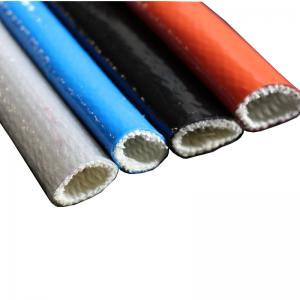
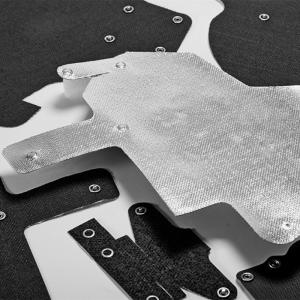
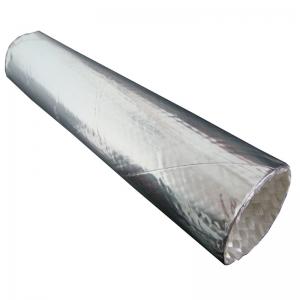
Para-Aramid Woven Sleeve vs Braided Aramid Sleeve: Which Structure Should You Choose?
A sleeve can look right on a roll and still be wrong for the assembly. It may fit the hose but not pass over the coupling. It may slide over a connector yet leave an open yarn pattern at the working diameter. A flat-looking sample may also be mistaken for a wrap when it is actually a closed tube.
When comparing a para-aramid woven sleeve with a braided aramid sleeve, start with the installed shape, the largest component the sleeve must pass over and the coverage required at the contact point. Construction affects fit, but neither “woven” nor “braided” establishes a cut-resistance or abrasion rating on its own.
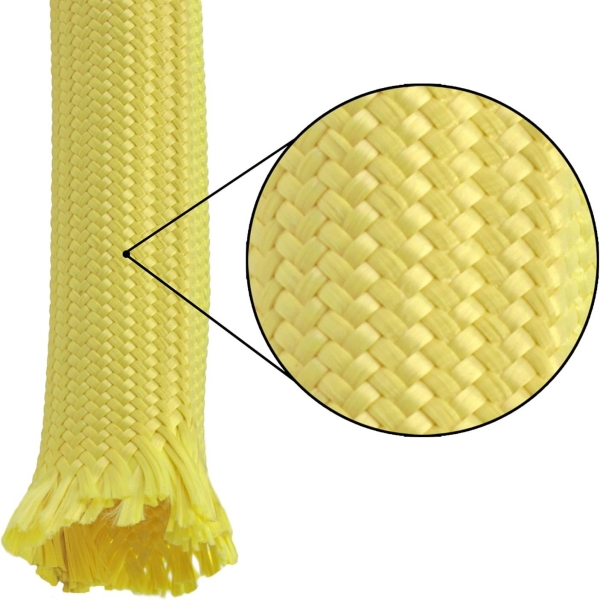
Flat Woven Does Not Mean Open-Sided
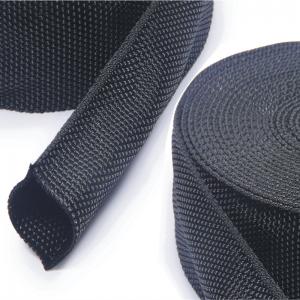
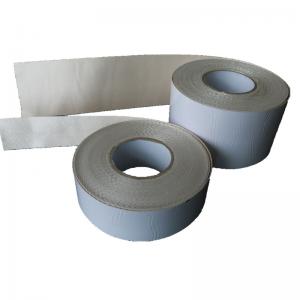
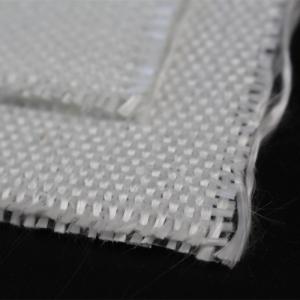
A woven sleeve uses interlaced lengthwise and crosswise yarns. A tubular woven product can lie flat when empty, which makes it resemble webbing. Its hollow interior, however, allows a hose, tube or cable bundle to pass through it.
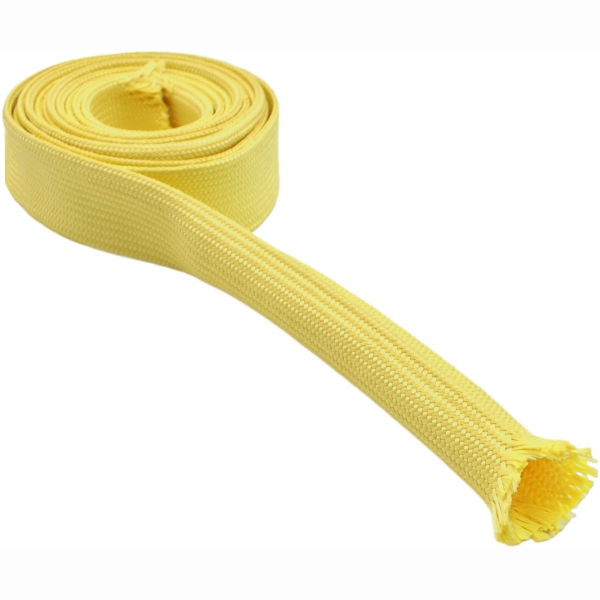
The PKFiresleeve para-aramid woven sleeve has this flat hollow construction and can be manufactured in flattened widths from 10 mm to 500 mm. That measurement describes the empty sleeve laid flat. It does not describe its internal diameter or the width of the component it will accommodate.
This distinction matters during installation. A closed tubular sleeve must be threaded over an accessible end. It is not a side-entry wrap, and its flat appearance does not mean it can be opened along its length around an already connected hose.
Braided Sleeving Changes Shape Through Yarn Movement
In a tubular braid, yarns cross at angles around the sleeve. An expandable braid changes diameter as those yarn angles change. Increasing the diameter generally reduces the available sleeve length; drawing the sleeve lengthwise generally reduces its diameter.
This is a change in textile geometry, not evidence that the aramid fiber stretches like an elastic yarn. The usable expansion range belongs to the specific sleeve construction. It should not be inferred from another braided material or from the nominal diameter alone.
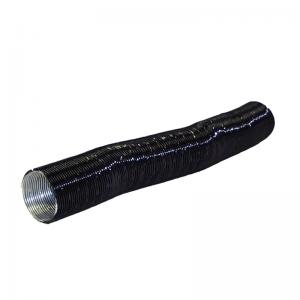
For a braided option, review aramid braided sleeving for hose and cable protection. Check both the fit over the largest installation feature and the yarn coverage after the sleeve has settled onto the protected component.
Compare the Sleeves in Their Working Condition
| Selection point | Flat hollow woven sleeve | Braided aramid sleeve |
|---|---|---|
| Construction | Lengthwise and crosswise yarns form a hollow woven structure. | Yarns interlace at angles around a tubular structure. |
| Size to specify | Lay-flat width, measurement condition and required usable opening. | Nominal diameter, permitted working range and installation clearance. |
| Fit to check | Whether the internal perimeter accommodates the component without forcing or bunching. | Whether diameter adjustment leaves suitable coverage and installed length. |
| Fitting clearance | Verify passage over the complete fitting profile; do not assume significant expansion. | Verify the specific expansion range; not every coupling will pass through. |
| Protection evidence | Evaluate the finished sleeve at the intended fit and contact condition. | Evaluate the finished sleeve at the intended fit and contact condition. |
Lay-Flat Width Is Not Hose Diameter
For an ideal thin-walled, non-stretching tube, the circumference is approximately twice its lay-flat width. This gives a useful geometric starting point:
Equivalent circular diameter ≈ (2 × lay-flat width) ÷ π
For example, a tube measuring 50 mm laid flat has an ideal equivalent circular diameter of approximately 31.8 mm, not 50 mm.
This is a geometric illustration, not a sleeve size recommendation. It ignores wall thickness, fold geometry, manufacturing tolerances and installation clearance. A real woven sleeve must be checked against its usable internal opening and the actual assembly.
For a non-circular bundle, record its cross-section and perimeter rather than treating its widest dimension as a diameter. A wide, shallow bundle and a round hose of the same maximum width do not require the same sleeve perimeter.
The Coupling May Determine the Size
Consider a hypothetical hose assembly with a 25 mm hose outside diameter and a 40 mm maximum fitting diameter. Under the same ideal thin-wall assumption, the hose alone corresponds to about 39.3 mm of lay-flat width. The fitting corresponds to about 62.8 mm, before any installation allowance.
Ordering solely around the hose diameter could therefore produce a sleeve that cannot pass over the fitting. Conversely, a sleeve selected only to clear the fitting may leave more room around the hose than the application permits.
Resolve that conflict before ordering. Establish whether installation takes place before end fittings are attached, whether the finished fitting can pass through the selected sleeve, or whether the assembly requires a separately specified side-entry design.
For hydraulic projects, use the braided Kevlar hose protective sleeve as a product reference and provide the fitting dimensions together with the hose outside diameter. A photograph or drawing should show elbows, locking features and other projections, not just the fitting bore size.
Where Each Construction Belongs on the Shortlist
A defined bundle profile with controlled end access
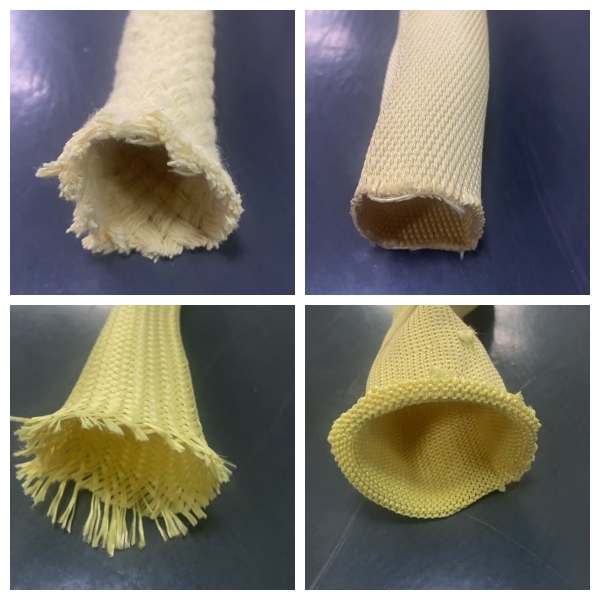
Evaluate a flat woven aramid sleeve when the assembly has a known cross-section and the sleeve can be installed from an accessible end. Specify the width around the actual bundle perimeter, then inspect the sample for excess folds, local tightness and unwanted movement. The hollow woven construction is not limited to flat components; suitability depends on fit.
A round assembly with diameter transitions
Evaluate an expandable braided aramid sleeve when installation requires the sleeve to change diameter within a documented range. Include the largest transition in the trial. Once fitted, check whether the braid remains adequately covered at the largest section and whether sufficient length remains at both ends.
A moving cable route with bends and branches
Neither construction should be approved from a straight, stationary sample alone. Check the intended bend positions, branch access and retention points in the assembly evaluation. Where a different textile response is needed, a knitted aramid sleeve can be evaluated as a separate option rather than assuming that either woven or braided construction must suit every route.
A Dense Appearance Is Not a Performance Rating
A compact surface can be useful at a contact point, but a photograph cannot establish service life. Yarn type, yarn size, construction density, wall thickness, finish and installed fit all belong in the comparison.
Request comparative evidence under relevant conditions. Record the contact surface, applied load, travel, movement pattern and failure criterion. Testing one sleeve loosely over a small mandrel and another tightly over a larger component does not isolate the effect of construction.
Likewise, “cut resistant” does not mean cut-proof. Remove avoidable sharp-edge contact through appropriate routing, edge protection or support rather than relying on the sleeve alone. Treat hydraulic spray containment, hose-whip restraint, electrical insulation and personnel protection as separate qualification requirements; do not infer them from an aramid material description.
Approve Fit, Coverage and Retention Together
Ask for an assembly sample rather than approving only a loose swatch. The evaluation should answer five practical questions:
- Can it be installed? Confirm passage over the actual end features without forcing or damaging the textile.
- Is the contact zone covered? Inspect the installed surface where rubbing or scraping is expected, including the outside of bends.
- Does it stay in position? Check whether the proposed retention arrangement allows migration or creates a concentrated pressure point.
- Is enough length available? Measure coverage after fitting and at the required assembly positions, not only on the roll.
- Can it be inspected? Preserve access to connections, identification and the areas included in the maintenance plan.
Carry out initial fit checks on isolated, depressurized equipment. Any operating-condition evaluation should follow the equipment manufacturer's approved safety and test procedures.
Put the Measurement Method on the Purchase Specification
An order reading only “aramid sleeve, 50 mm” leaves too much open to interpretation. State whether 50 mm means lay-flat width, nominal internal diameter or another agreed measurement.
For a woven sleeve, define how the width is measured and whether the sample is relaxed or under a specified light tension. For a braid, define the nominal size, intended working diameter and required installed coverage. Include the covered length, end-treatment requirement, assembly sequence and the approved sample reference.
Confirm the yarn composition and any coating or finish separately. Where the purchase specification requires Kevlar-branded fiber, request material traceability: the general description “para-aramid” does not by itself identify the fiber brand.
For a custom flat woven Kevlar aramid hose sleeve, send PKFiresleeve the requested lay-flat width, component dimensions, largest fitting profile, covered length and quantity. Include a routing drawing or sample where the fit is difficult to describe. This provides a clearer basis for sampling and quotation than a material name alone.
Questions About Woven and Braided Aramid Sleeve Fit
Can a flat woven sleeve protect a round hose?
Yes, provided its usable opening and installed fit suit the hose. “Flat” describes the empty sleeve's lay-flat form, not a requirement that the protected component must be flat.
Can equal nominal sizes be substituted between woven and braided sleeves?
Not without checking the measurement definitions. A lay-flat width and a nominal diameter are different dimensions, and a braid's fit also depends on its specified working range.
Does passing over the fitting prove that a sleeve is suitable?
No. Fitting clearance is only one check. The sleeve must also provide the required coverage, retained position and length on the hose or cable during the intended use.
Which construction offers better abrasion protection?
The answer requires a comparison of the finished sleeves under relevant contact and movement conditions. Woven and braided are construction descriptions, not stand-alone performance grades.