English
 français
 Deutsch
 русский
 italiano
 español
 português
 العربية
 日本語
 한국의
 Türkçe
 Polski
 Tiếng Việt
 slovenský
 Indonesia



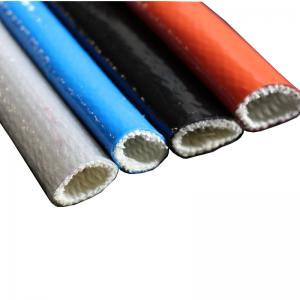
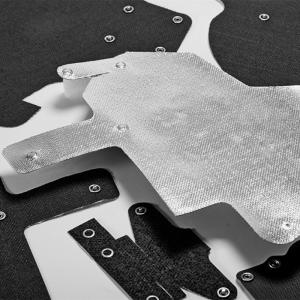
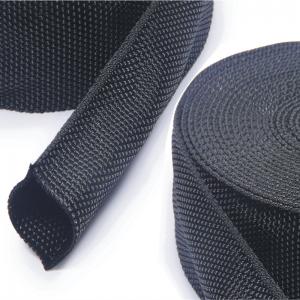
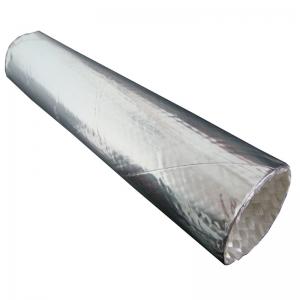
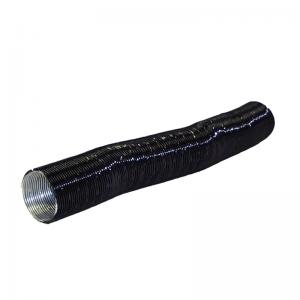
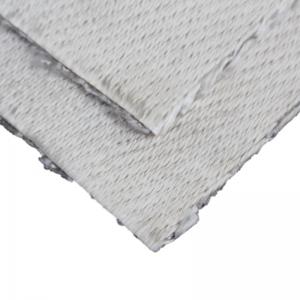
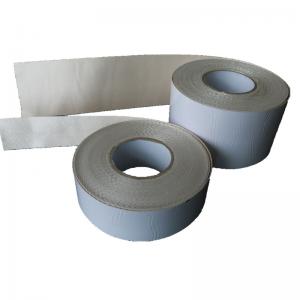
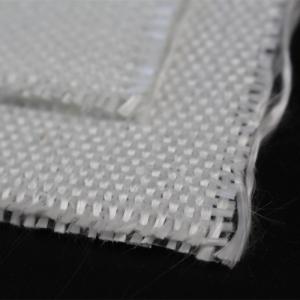
Aluminum fiberglass tape is designed to reduce radiant heat reaching industrial hoses, cables, tubing and other temperature-sensitive components. Its performance depends on more than the presence of a silver surface. The aluminum-facing direction, clearance from the heat source, overlap, fixing method and condition of the reflective face all influence the installed result.
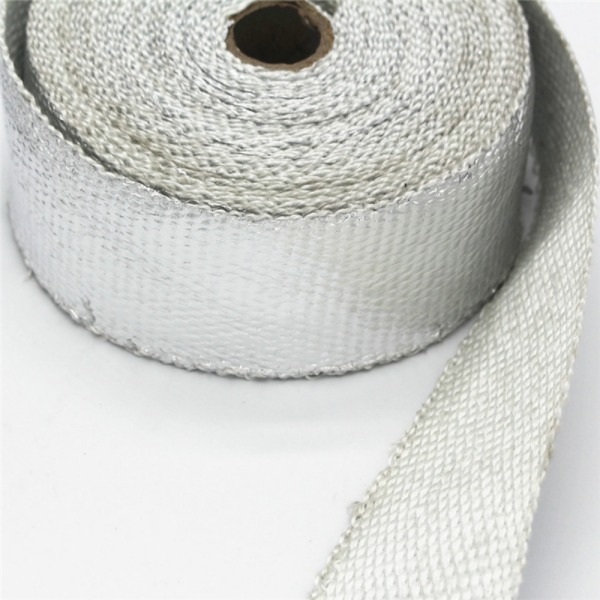
BSTFLEX Heat Reflective Aluminum Fiberglass Tape combines a fiberglass textile with an aluminum-facing layer. The fiberglass provides a flexible supporting textile, while the outward-facing aluminum surface is intended to reduce radiant heat transfer. This article explains how to specify and install that construction for industrial use.
What Does the Aluminum Facing Change?
Uncoated fiberglass tape is mainly selected as a thermal textile for wrapping, lagging and local insulation. Adding an aluminum facing changes the exposed surface of the tape.
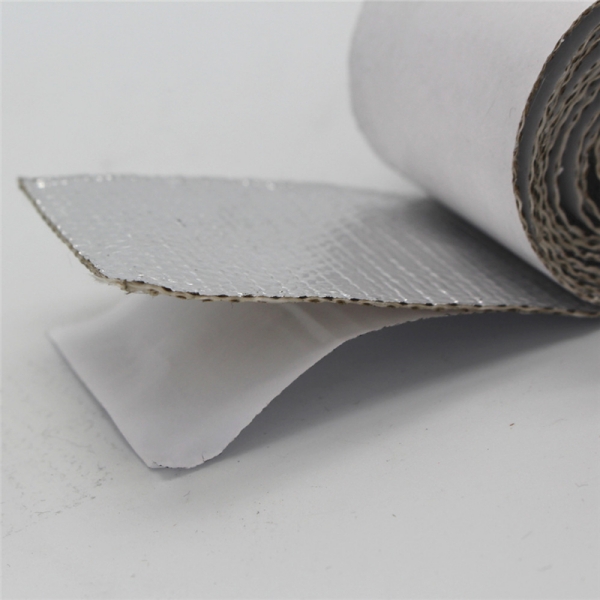
The facing can provide:
- a low-emittance surface for radiant heat protection;
- a visible outer layer that helps identify the reflective side;
- surface protection for the underlying fiberglass textile;
- a barrier layer that can limit direct contamination of the textile face, subject to the actual construction and exposed edges.
The aluminum layer does not turn a thin tape into a complete insulation system. Heat can still reach the protected component through conduction, convection and any unprotected gaps. Selection should therefore begin with the complete heat path.
Radiant Heat Is Different from Contact Heat
Radiant heat travels from a hotter surface to a cooler surface without requiring physical contact. A polished aluminum-facing layer is most useful when it faces the radiant source across an open clearance.
If the reflective face is pressed directly against the hot source, conductive heat transfer through the contact area becomes important. In that condition, reflectivity alone cannot provide the same shielding effect as a correctly oriented surface facing the source.
For a hose or cable located near a hot process line, the usual objective is to wrap the cooler component and place the aluminum face outward toward the radiant source. The tape can contact the component it protects, while clearance should be maintained between the wrapped component and the hot source wherever the equipment design permits.
For a hot pipe wrapped to reduce outward radiation, heat first conducts from the pipe into the tape. The aluminum face may reduce radiation from the outer surface, but the total heat loss still depends on the complete insulation arrangement, thickness, airflow and installation.
Face the Aluminum Surface Toward the Heat Source
The reflective side must have a clear view of the radiant source to perform its intended function. If the aluminum surface faces away from the source or is buried under another non-reflective layer, the expected radiant-heat benefit can be reduced.
Before wrapping, identify:
- the principal radiant heat source;
- the protected component;
- the direction from which the strongest exposure occurs;
- areas shadowed by brackets, guards or adjacent components;
- locations where heat can reach the component from more than one direction.
Where exposure comes from several directions, a single narrow strip may not provide complete coverage. Review the route and wrap pattern on the actual assembly.
What Air Gap Is Required?
There is no universal air-gap dimension that is correct for every aluminum fiberglass tape installation. The required clearance depends on source temperature, source size, exposure angle, airflow, component temperature limit, tape construction and surrounding geometry.
The important principle is that a reflective surface should face an open space or clearance toward the radiant source. That separation allows radiant exchange to occur at the aluminum face. It also reduces direct conductive contact with the hot source.
For industrial equipment, determine the available clearance from the drawing or a physical survey. Then verify the protected-component temperature under representative operating conditions.
| Installation condition | What to evaluate |
|---|---|
| Protected component separated from the heat source | Orient the aluminum face toward the source and record the minimum operating clearance. |
| Tape touches the hot source | Direct conduction becomes significant. Reassess whether reflective tape is the correct construction. |
| Clearance changes during movement | Check the closest position through the full operating cycle, including vibration and hose movement. |
| Restricted enclosure with limited airflow | Measure the component temperature in the actual enclosure; reflected heat may be redistributed to other surfaces. |
Do not advertise a fixed temperature reduction unless the specific installation has been tested under defined conditions. A tape that performs well in an open laboratory arrangement can give a different result in a compact enclosure.
Overlap Controls Coverage and Layer Build-Up
The current BSTFLEX p93 product information describes a 50% overlap wrapping method. At 50% overlap, each turn covers half of the preceding turn, producing approximately two layers over most of a straight wrapped area.
Overlap affects:
- coverage continuity;
- finished thickness;
- material consumption;
- flexibility around bends;
- the number of cut edges exposed to contamination or wear.
More overlap is not automatically better. Excessive build-up can interfere with clamps, connectors and equipment clearances. Too little overlap can leave openings through which radiant heat reaches the protected component.
Specify the overlap in the installation instruction and use the same value for quantity estimation. Trial the wrap at bends, branch points and diameter transitions before approving a production quantity.
Keep the Reflective Face Smooth and Exposed
A reflective surface works best when it remains clean, continuous and oriented toward the heat source. Severe wrinkling, tearing, punctures, heavy contamination and damaged seams can reduce the usable reflective area.
During installation:
- avoid crushing the aluminum face with tools;
- do not drag the tape over sharp hardware;
- keep oil, dirt and process residue away from the reflective surface where practical;
- use a wrap angle that allows the tape to lie smoothly;
- inspect exposed edges and termination points.
In service, include the aluminum face in the maintenance inspection. Clean or replace the wrap according to the approved procedure if contamination or damage prevents it from performing its intended role.
Use Mechanical Fixing Without Damaging the Component
The p93 construction is presented as a mechanically retained wrap. The current product information lists safety wire, clamps, ties or silicone tape as possible methods for securing it after installation.
The selected fixing must suit the temperature, vibration and surrounding environment. It should retain the wrap without cutting through the aluminum-facing layer or damaging the hose, cable, tubing or insulation underneath.
For a hose or cable, avoid excessive local pressure. A tight metal tie can become a stress point or damage a soft outer jacket. Where wire or bands are used, define their material, width, edge condition and spacing.
Fixing points should not pull the tape away from the protected component or expose an unwrapped line of sight to the radiant source. Check the start, finish and transitions after the component has moved through its operating range.
Plain Aluminum Fiberglass Tape vs Adhesive-Backed Tape
Mechanically retained aluminum fiberglass tape and adhesive-backed aluminum fiberglass tape are different product structures.
The plain wrap is useful where the installer can spiral-wrap the component and secure it with an approved mechanical method. It avoids relying on a pressure-sensitive adhesive as the primary positioning layer.
Where direct placement, die-cut shapes or installation positioning is required, evaluate the separate adhesive-backed aluminum fiberglass tape. In that construction, the adhesive chemistry, application temperature and service temperature must be specified separately from the fiberglass and aluminum layers.
Do not treat the two products as interchangeable simply because both have a silver face. The backing structure affects installation, flexibility, finished thickness and temperature limits.
Do Not Confuse This Product with HVAC Foil Sealing Tape
Many products described as aluminum foil tape are thin pressure-sensitive tapes designed for duct seams, vapor sealing or general HVAC work. Aluminum fiberglass insulation tape is a reinforced textile construction intended for industrial thermal protection.
Before purchasing, confirm:
- whether the backing is fiberglass textile or unsupported foil;
- whether the product has a PSA backing;
- the finished thickness;
- the intended heat-transfer function;
- the service-temperature limit of the complete construction;
- whether mechanical retention is required.
A foil duct-sealing tape should not be substituted for a mechanically retained industrial fiberglass wrap without a technical review.
Separate Working Temperature from Melting Point
The current p93 product page lists a working-temperature range for the complete tape and separately lists a higher melting-point value. The higher figure should not be used as the continuous service temperature.
For an aluminum-faced textile, the usable temperature can be limited by the fiberglass construction, the aluminum layer, the lamination method, surface condition and mechanical duty. Request the service data for the exact production construction.
If the application includes short peaks, provide the peak temperature and duration separately. Do not use an unqualified “extreme heat” statement in place of a continuous and peak exposure specification.
Measure the Protected Component, Not Only the Tape Width
The current BSTFLEX page lists standard tape widths from 25 mm to 200 mm, a nominal thickness of 1.5 mm and 30 m roll lengths. These are supply references; the correct width depends on the component and installation.
For an RFQ, provide:
- hose, cable, tube or pipe outside diameter;
- length requiring protection;
- available clearance to the heat source;
- tape width and overlap;
- number of wrapping passes;
- fixing method;
- normal and peak exposure temperatures;
- maximum permitted temperature of the protected component;
- vibration, movement, oil or chemical exposure;
- quantity and packaging requirements.
Where the installation includes fittings or connectors larger than the main component, size the wrap and clearance around those points as well.
Approve the Installed Assembly Under Representative Conditions
A useful sample approval should evaluate the tape in the intended geometry. Install it with the proposed overlap, orientation and fixing method, then expose the assembly to representative operating conditions.
Record:
- heat-source temperature;
- distance and orientation between source and tape;
- ambient airflow;
- temperature at the protected component;
- duration of the operating cycle;
- surface condition before and after exposure;
- movement or displacement of the wrap;
- condition of the fixings.
Where the protected component has a maximum allowable temperature, use that value as an acceptance criterion. The silver appearance of the tape is not proof that the component remained within its limit.
Request Aluminum Fiberglass Tape for Industrial Radiant Heat Protection
BSTFLEX supplies Heat Reflective Aluminum Fiberglass Tape for industrial hoses, cables, tubing and pipework exposed to radiant heat. Standard and requested widths, lengths and packaging can be reviewed for OEM and maintenance supply.
Send the component dimensions, heat-source location, available clearance, operating temperatures, fixing method and required quantity. Include a drawing or installation photograph where the heat source and protected component are difficult to describe.
For other industrial woven, coated, adhesive-backed and gasket constructions, compare the BSTFLEX industrial high temperature tapes range.
Request an aluminum fiberglass tape quotation for your industrial radiant heat application.